
-

FANCY CUT DIAMOND TENNIS BRACELET
$7,825.00 - $8,545.00 -

GRADUATED DIAMOND OPEN BANGLE BRACELET
$3,995.00 -
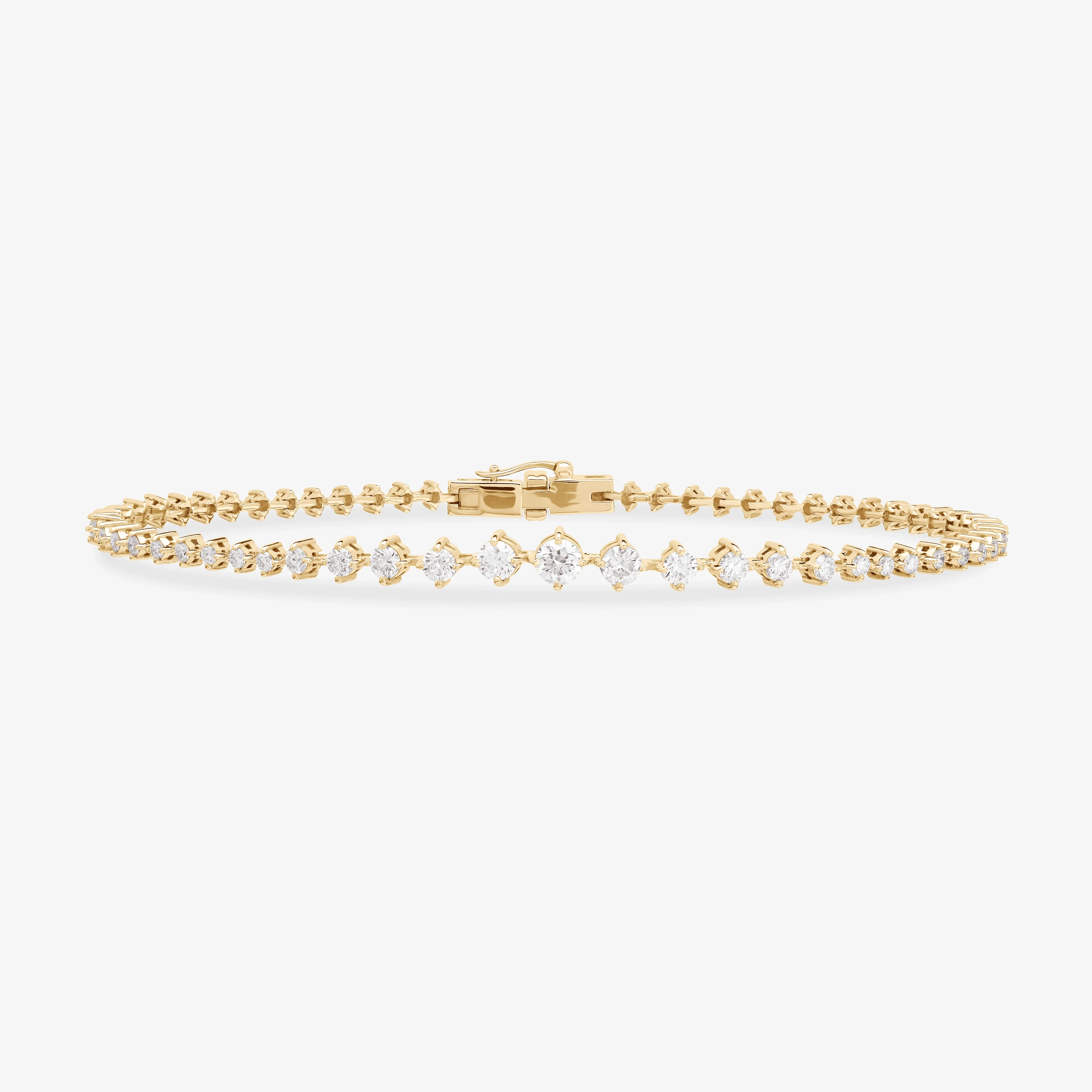
GRADUATED DIAMOND TENNIS BRACELET
$5,575.00 - $6,935.00 -

-

PEAR CUT DIAMOND HINGE BANGLE
$7,475.00
14k Gold Diamond Bracelets
Diamonds, all the way around—or exactly where they count. LANA Diamond Bracelets pair natural diamonds with solid 14k gold in designs ranging from classic tennis bracelets to sculptural bangles, chain bracelets, and hand lariats. Each style brings its own balance of brilliance, structure, and movement to the wrist.
LANA uses natural diamonds rather than lab-created stones. Depending on the bracelet, diamonds may create a continuous line, accent a signature chain, trace part of a bangle, or extend across the hand. Available carat weights, diamond shapes, settings, gold colors, lengths, and dimensions vary by design.
A diamond tennis bracelet places natural diamonds in an uninterrupted line around the wrist. Its flexible construction allows the bracelet to move while maintaining consistent brilliance from every angle. Wear one as a clean line of diamonds or use it as the anchor of a larger bracelet stack.
Diamond chain bracelets create a different effect by combining moving gold links with concentrated points of light. Some designs use diamonds as a precise accent, while others incorporate stones throughout the silhouette. The contrast between polished gold and diamonds makes the structure of the chain more visible.
A diamond bangle brings greater definition to the wrist. Its rigid or semi-rigid form holds its shape, while natural diamonds add brilliance against the polished 14k gold. Slim diamond bangles layer easily, while wider sculptural designs carry enough presence to stand alone.
Diamond hand lariats extend from the wrist across the hand to a ring or finger loop. This elongated placement allows the diamonds to catch the light beyond the traditional bracelet line. Because the design already covers more of the hand, a hand lariat makes a strong statement without additional layering.
Natural white diamonds create a distinct contrast against each gold color. Yellow gold adds warmth, white gold produces a cooler and more continuous effect, and rose gold brings softness to the setting. Available metal colors vary by bracelet.
For more color, explore bracelets featuring natural blue diamonds. Their denim-blue hue creates a saturated alternative to white diamond jewelry while maintaining the durability and brilliance of a natural diamond. Blue diamond bracelets can be worn alone or paired with white diamonds for sharper contrast.
When choosing a natural diamond bracelet, consider the stones and the construction together. The Four Cs—cut, color, clarity, and carat weight—help describe diamond quality, while the bracelet’s setting, flexibility, proportions, and total design determine how it looks and moves on the wrist.
Cut influences the way a diamond reflects light. Color and clarity describe visual characteristics of the stone, while carat refers to weight rather than visible size alone. On a bracelet containing several diamonds, total carat weight represents the combined weight of every stone in the design.
A 14k gold diamond bracelet can be worn alone when you want its setting and silhouette to remain clear. A tennis bracelet produces a continuous line of brilliance, a diamond chain bracelet alternates between gold and light, and a bangle creates a more structured statement.
For a layered look, pair a diamond bracelet with polished 14k gold bracelets. Place a tennis bracelet between two gold chains, contrast a rigid diamond bangle with a flexible chain bracelet, or wear a natural diamond bracelet beside a clean polished cuff. Varying widths and textures keeps each piece visible.
When building a diamond bracelet stack, begin with one anchor piece and add around it. Keep delicate settings away from heavier bracelets that may repeatedly strike or press against the diamonds. Slight differences in length can also help the bracelets fall naturally rather than competing for the same position.
Fit affects both appearance and security. A diamond tennis bracelet generally sits closer to the wrist, while chain bracelets may have more movement. Bangles and hand lariats have different sizing requirements based on their construction. Measure the wrist and compare it with the fit guidance provided for the individual design.
A diamond bracelet makes a lasting gift for an anniversary, birthday, wedding, graduation, achievement, or milestone. Tennis bracelets offer a classic choice, while hand lariats, diamond chain bracelets, and sculptural bangles bring a less expected silhouette. Consider the recipient’s wrist size, preferred gold color, and existing jewelry before selecting a design.
Complete the look with coordinating diamond necklaces, diamond earrings, and diamond rings. Matching the gold color creates continuity, while varying the settings and silhouettes keeps each piece distinct.
To care for a diamond bracelet, fasten its clasp before storing it separately in a pouch or jewelry box. Wipe the gold and natural diamonds gently with a clean, soft cloth. Avoid harsh chemicals, abrasive materials, strong impacts, and heavy pressure that could affect the links, clasp, or settings.
For more information about natural diamonds, diamond shapes, and the Four Cs, explore the LANA Diamond Guide.
Q1. Are LANA diamond bracelets made with natural diamonds?
Yes. LANA Diamond Bracelets feature natural diamonds set in solid 14k gold. LANA does not use lab-created diamonds.
Q2. What styles of diamond bracelets does LANA offer?
The collection includes diamond tennis bracelets, chain bracelets, bangles, hand lariats, and sculptural designs. Available gold colors, diamond placement, carat weights, lengths, and silhouettes vary by style.
Q3. What is a diamond tennis bracelet?
A diamond tennis bracelet features a continuous line of diamonds set around the wrist. Its flexible construction allows it to move while maintaining an uninterrupted line of brilliance.
Q4. What does total carat weight mean on a diamond bracelet?
Total carat weight refers to the combined weight of all diamonds in the bracelet. It does not describe the weight of each individual stone or the total weight of the finished bracelet.
Q5. How should a diamond bracelet fit?
A diamond bracelet should feel secure without pressing tightly against the wrist. Tennis bracelets generally sit closer, while chain styles may have more movement. Compare your wrist measurement with the length listed for the individual design.
Q6. Can I stack a diamond bracelet with gold bracelets?
Yes. Pair a diamond tennis bracelet, chain bracelet, or bangle with polished gold chains and bangles. Varying the widths and structures creates separation while allowing the diamonds to remain visible.
Q7. Is a diamond bracelet a meaningful gift?
Yes. A natural diamond bracelet can mark a birthday, anniversary, wedding, graduation, achievement, or other milestone. Confirm the recipient’s wrist size and preferred gold color before selecting a fitted design.
Q8. How should I care for a diamond bracelet?
Fasten it before storing it separately and wipe the gold and diamonds gently with a clean, soft cloth. Avoid harsh chemicals, abrasive materials, strong impacts, and pressure that could affect the clasp, links, or settings.
“Bold scale. Delicate construction. Sexy movement. Lightweight gold.” LANA made something that sounds contradictory work: jewelry that looks big and impactful but feels barely there. “Bold enough to be noticed. Light enough to live in.” — Lana Bramlette, CEO, founder, and designer